
-
Regions
- Dolomites
- Plan de Corones / Kronplatz
- Alta Pusteria / Hochpustertal
- Alta Badia
- Val Gardena / Gröden
- Val d'Ega / Eggental
- Alpe di Siusi
- Valle Isarco / Eisacktal
- Merano / Meran & Environs
- Bolzano / Bozen & Environs
- Valli di Tures e Aurina / Tauferer Ahrntal
- Val Venosta / Vinschgau
All regions in South Tyrol:
A frontier region in the heart of Europe
This region’s modern history as “Südtirol” began in 1919 when the part of Tyrol south of the Brenner Pass was taken away from Austria and annexed by Italy. This new border subsequently divided a formerly united province which had been part of Austria for five centuries.
The Alpine region has always been a frontier. The Romans regarded the lands beyond Tyrol as the north, while in the Middle Ages the Holy Roman Emperors who travelled through Tyrol on their way to Rome to be crowned by the Pope thought of the regions across the Alpine watershed as the south. Two Alpine passes ensured that this ‘Land in the Mountains’, as Tyrol was called, retained considerable importance in the European power structure. Merchants, pilgrims, princes with their retinues, adventurers and soldiers travelled through Tyrol, paid tolls, customs duties and for the assurance of safe conduct, and stayed at inns. Europe’s rulers and politicians were at pains to remain on good terms with Tyrol, while grasping at every opportunity for conquest.
Tyrol as a province first appears in documents dating from 1271. Later in 1330 princes of Europe’s powerful families, the Wittelsbachers, the Habsburgers and Luxemburgers, were vying for the hand of the heiress Margarete of Tyrol. The Wittelsbach Duke of Bavaria told his son that “Tyrol is not a piece of earth that we can forego”, though eventually Margarete succeeded in having her marriage to him annulled. As thanks the Tyroleans received the ‘Great Freedom Charter’ which historians have called Tyrol’s Magna Carta. It guaranteed that their rights would be safeguarded. The Habsburgers who eventually inherited Tyrol even freed its citizens from conscription in times of war. On their part the Tyroleans were to be entirely responsible for their own defence in their province which, until 1919 stretched from Kufstein, now on the border between Austria and Bavaria, to Borghetto on the present-day border between the provinces of Trento and Verona.
Tyrol was proud of its special position. Whenever rulers questioned their rights the Tyroleans confronted them with the old documents. In this frontier country – which Tyrol has been throughout history in terms of language, culture and politics – every infringement on liberty and attempts at suppression were quickly countered.
The South Tyroleans were not prepared for the events of the 20th century. Their endeavours towards achieving cultural and political independence came to nothing in the face of the fascist government’s policy of Italianizing the region. South Tyrol strove for decades to achieve its own autonomy statute. Today Germans, Italians and people from the Ladin ethnic group live together speaking their own languages and remaining true to their individual traditions. This frontier region has once again attained its own very special status.
Ötzi, Rhaetians, Romans
The Man from the glacier provides us with undreamt-of insights into life in the Bronze Age, while the Rhaetians - the ancient inhabitants of South Tyrol - and their Roman conquerors have all left ...
Bishops, farmers, princes
During the Middle Ages ecclesiastical and secular powers struggled for dominance in Tyrol. The Tyroleans took on the armies of Napoleon alone.
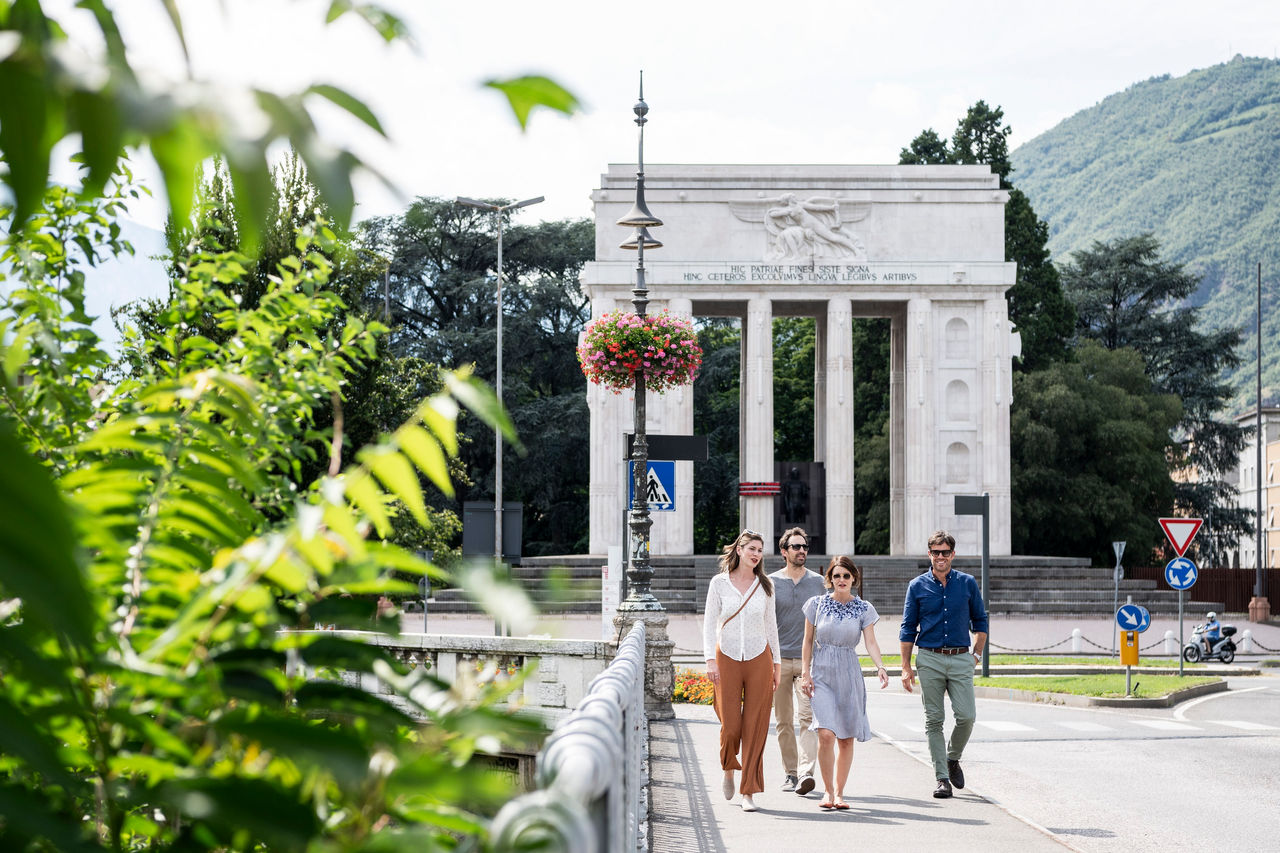
South Tyrol is annexed by Italy
After the First World War the victors ceded the southern part of Tyrol to Italy. A struggle for self-determination and minority rights began.
A minority finally gains its rights
The diplomatic route from the beginning of the independence movement to attaining a degree of self-government as the Autonomous Province of Bolzano/Bozen, Südtirol was arduous, the atmosphere at ...
Other items that may interest you
Castles & manors
Firmiano/Sigmundskron castle and the MMM Messner Mountain Museum
Castle Firmiano towers over the Adige/Etsch Valley, southwest of Bolzano/Bozen more...
Architecture
Gothic architecture – The cloister of Bressanone/Brixen
Until 1964 Bressanone/Brixen had been a Bishop’s See for 1000 years. The sumptuous architecture of ... more...
Thermal baths
Modern architecture meets the Belle Epoque
By the turn of the last century Merano/Meran had developed into a health resort of world renown ... more...